

Digital Form 56-1 One Report 2025
Betagro Public Company Limited



Financial and Operational Highlights
Share of revenue from sale of goods and rendering of services by segment
122,370
Million Baht
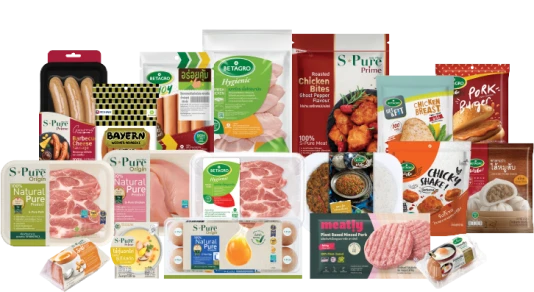
52.3 %
Thailand Food Business
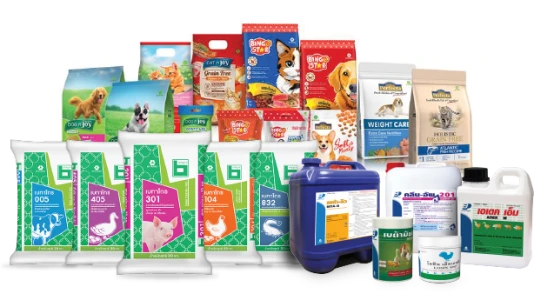
28.2 %
Animal Nutrition & New Ventures Business
19.4 %
International Business
Total Revenue from Sales and Services
122,370
Unit : Million Baht
Net Profit
6,685
Unit : Million Baht
Total Assets
66,920
Unit : Million Baht
Total Liabilities
33,806
Unit : Million Baht
Total Shareholders' Equity
33,114
Unit : Million Baht
Unit : Million Baht

Revenue by Species
64,013
Million Baht
Pork 25,648
Chicken 21,342
Egg 5,703
Processed Food & Meat 4,654
Others6,666
Revenue by Product
64,013
Million Baht
Consumer Food 35,500
Non-Package 9,286
Livestock 5,638
Co & By-Products and Other Food 13,589
Animal Nutrition & New Ventures Business
Unit : Million Baht
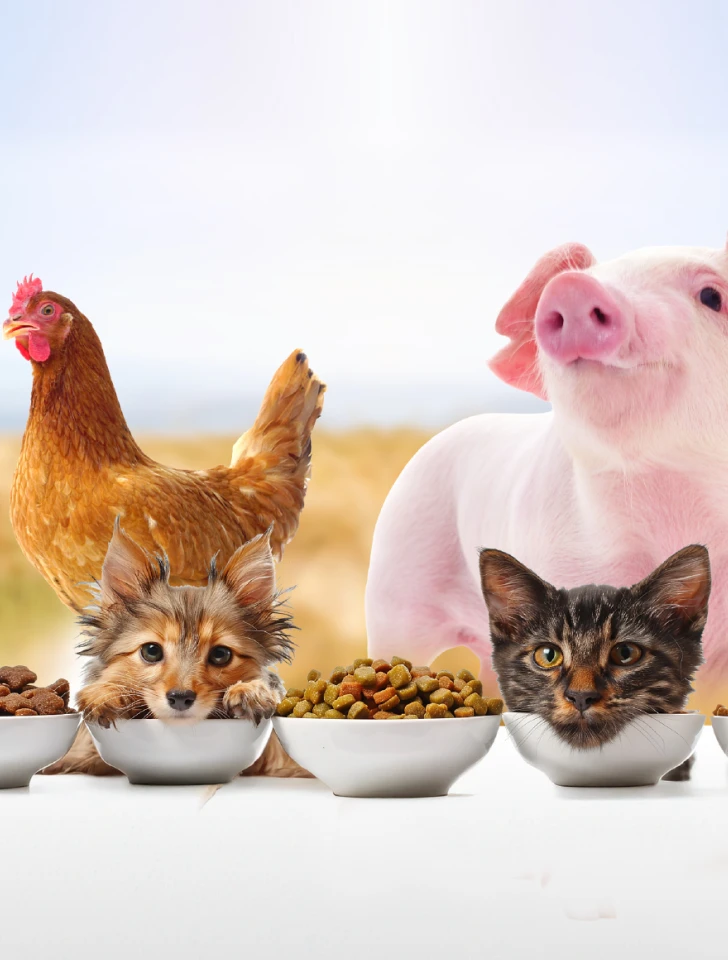
Agro Business
31,874
Million Baht
Animal Feed 27,151
Animal Health 3,515
Others 1,208
Pet Business
2,660
Million Baht
Premium 355
Standard 613
Economy 1,692
Unit : Million Baht

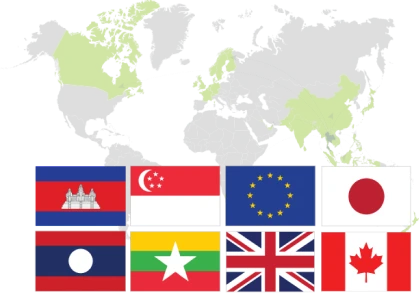
23,729
Million Baht
Thailand's Export 14,646
Cambodia 4,764
Singapore 2,789
Laos 1,494
Others 36
Purpose, Belief and Business Strategies

Purpose or Vision:
Help enrich people’s lives
with Better Food
“Better Food” means
- Highest Food Safety Standards
- Superior Quality and Deliciousness
- Fair Prices
- Produced Sustainably

Belief or Mission:
People must have choices, and we must work hard
to deserve people’s trust
Business Strategies:
Driven by 3 key business strategies including
- International Expansion through mergers and acquisitions (M&A) and strategic partnerships in high-potential markets
- Product and Channel Mix Optimization to enhance profitability by focusing on high-margin products and channel
- Cost Transformation through leveraging digital technology and process innovation to improve operational efficiency, reduce costs, and enhance profitability
Driving Business towards Sustainability
Sustainability Management Policy and Goals
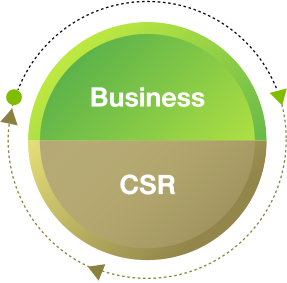
Betagro and its subsidiaries believe that sustainable business growth must be accompanied by genuine contributions to society, community and environment. The Company has therefore laid out a policy and procedures for sustainability management in line with the United Nations’ Sustainable Development Goals (SDGs). Under this policy and procedures, business operations are carried out based on environmental, social and governance (ESG) ethics for stakeholders throughout the entire supply chain. Betagro and its subsidiaries have specified the following two sides of its operations to take the lead in achieving a balance between profit, people and planet:

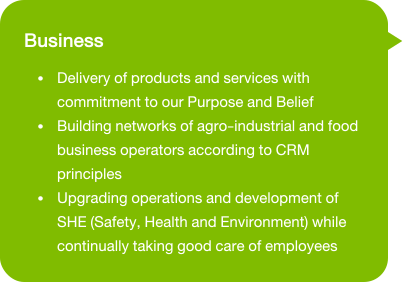
1. Business
- Delivery of products and services with a purpose in mind
- Driving business operations based on food related SDGs
- Building networks of agro-industrial and food business operators according to the Customer Relationships Management (CRM) principles
- Upgrading operations and the development of Safety, Health and Environment (SHE) knowledge while continually taking good care of employees
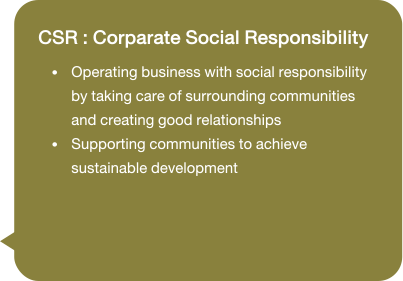
2. Corporate Social Responsibility (CSR)
Betagro and its subsidiaries operate business with social responsibility by creating good relationships with surrounding communities and taking care of them while ensuring that Betagro operations do not have any negative impact on their lives. At the same time, support is given to communities so that they can also achieve sustainable development. Through Circular Economy business operations and with other parties working together, the use of resources with the highest efficiency including waste recycling and reduction was developed and designed.
BETAGRO SUSTAINABLE DEVELOPMENT
With commitment to our Purpose and Belief, we have specified two sides of our operations to take the lead in achieving a balance between profit, people and planet.
SDGs 2
ZERO HUNGER
Betagro and its subsidiaries have jointly promoted small and medium enterprises (SME) in the supply chain including nearby communities operating agriculture and livestock businesses as well as small and medium restaurants around the country to improve production efficiency and effectiveness and create food stability. To achieve this, gaps are identified and business efficiency problems are solved.
SDGs 3
GOOD HEALTH AND WELL-BEING
Betagro and its subsidiaries have jointly promoted good health among consumers through the delivery of high-quality products such as chicken meat, pork and eggs from animals raised without antibiotics. In cooperation with the public and private sectors, educational institutes and hospitals in the area, life quality of people in those communities have been improved through food safety knowledge development, joint food safety project implementation, and employee health promotion through various projects carried out both at the operating locations and with communities. Implemented projects include promotion of agricultural farming which is safe, hygienic and chemical free in order to guarantee safety for consumers in each community.
SDGs 12

RESPONSIBLE CONSUMPTION AND PRODUCTION
Betagro and its subsidiaries have jointly created responsible production, promoted wise use of resources and the environment with minimum waste. At the same time, the Company’s business locations are monitored and improved in terms of pollution, waste water and waste management based on the related standards such as plastic waste recycling and use of various residues for soil improvement.
SDGs 13

CLIMATE ACTION
Betagro and its subsidiaries have joined in promoting the reduction of greenhouse gas emission by setting guidelines for the greenhouse gas management, including database collection, evaluation of greenhouse gas emission and operational improvement through various projects such as Solar Rooftop Project using solar energy to replace the use of electricity, and Biomass Project using biomass energy to replace fossil fuel.
SDGs 17

PARTNERSHIPS FOR THE GOALS
Betagro and its subsidiaries have jointly built networks and boosted the cooperation between various parties with similar objectives and beliefs. The focus is on helping all stakeholders to achieve a better quality of life by using higher quality and safer food at fair prices in their businesses. This cooperation is built among community networks, government units, educational institutes and the private sector in order to drive towards sustainable development goals.